Oriient
Unifying Indoor Navigation Experiences
Unifying Indoor Navigation Experiences
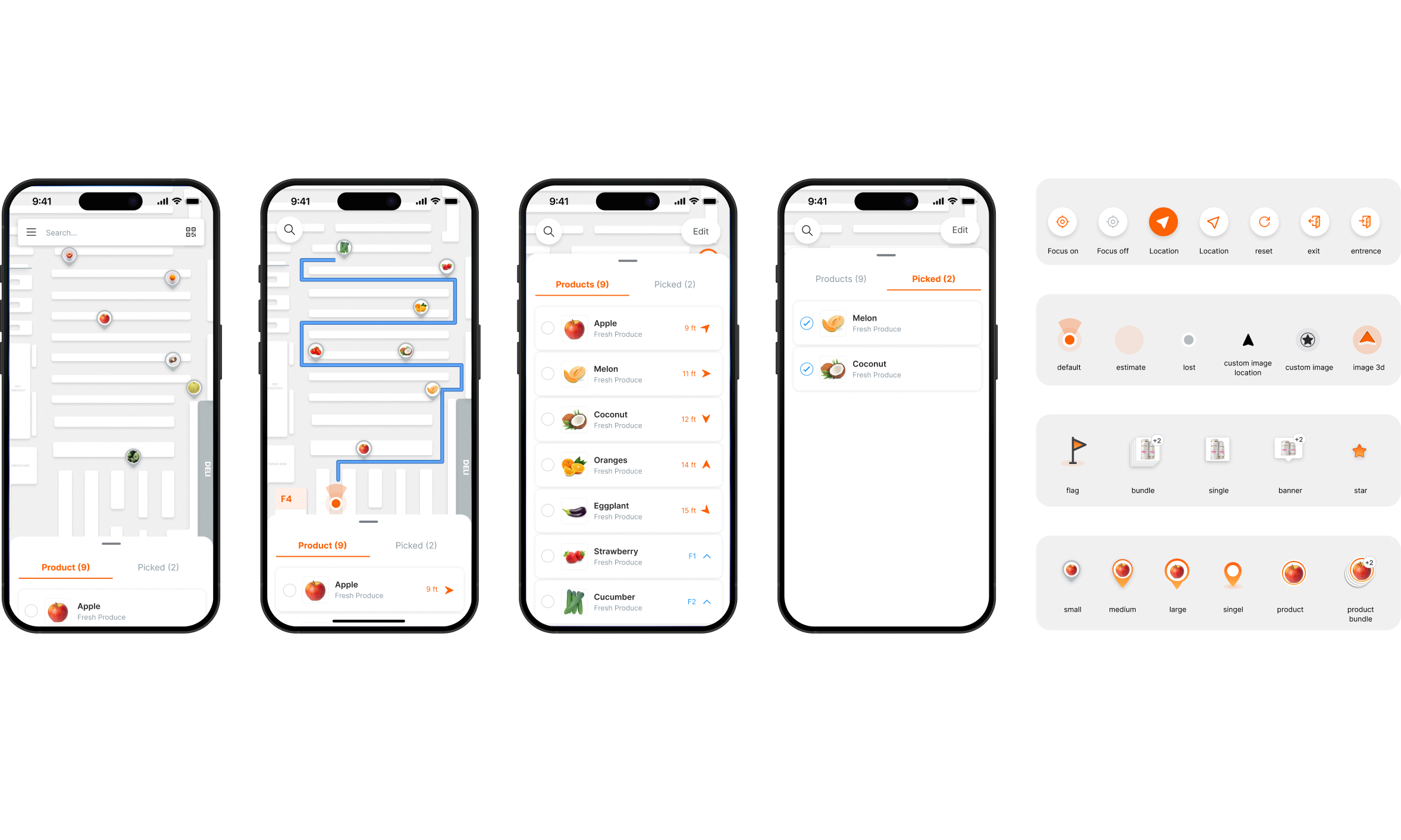
Oriient pioneers accurate, software-only indoor location services leveraging Earth's magnetic field and proprietary deep learning technology. Their products include (but are not limited to) shopper-facing mobile experiences and store mapping applications.
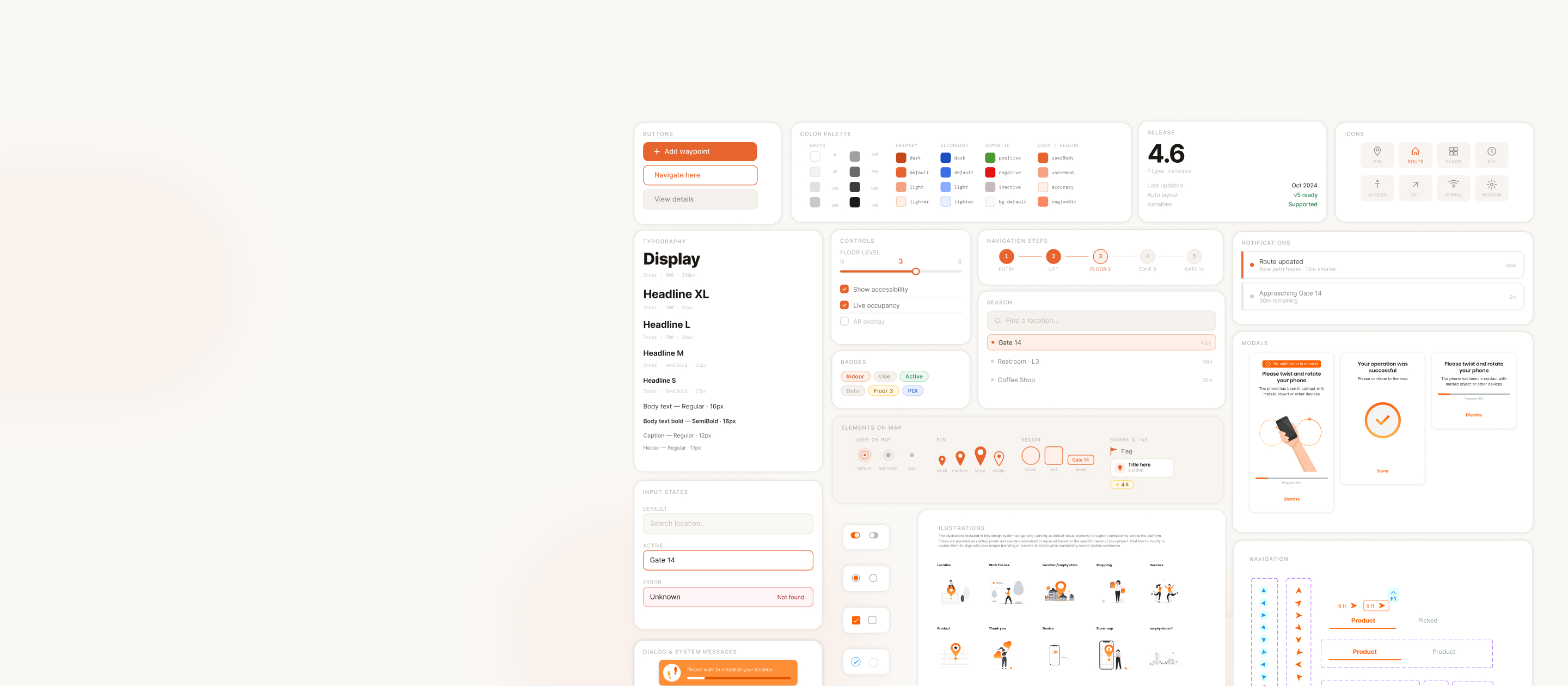
As new capabilities were added over time, inconsistencies began to emerge across Oriient's visual language and interfaces. The growing complexity made it harder to maintain a coherent user experience and scale the product efficiently.
My challenge was to establish a unified design foundation that could support multiple products while improving usability, consistency, and long-term scalability.
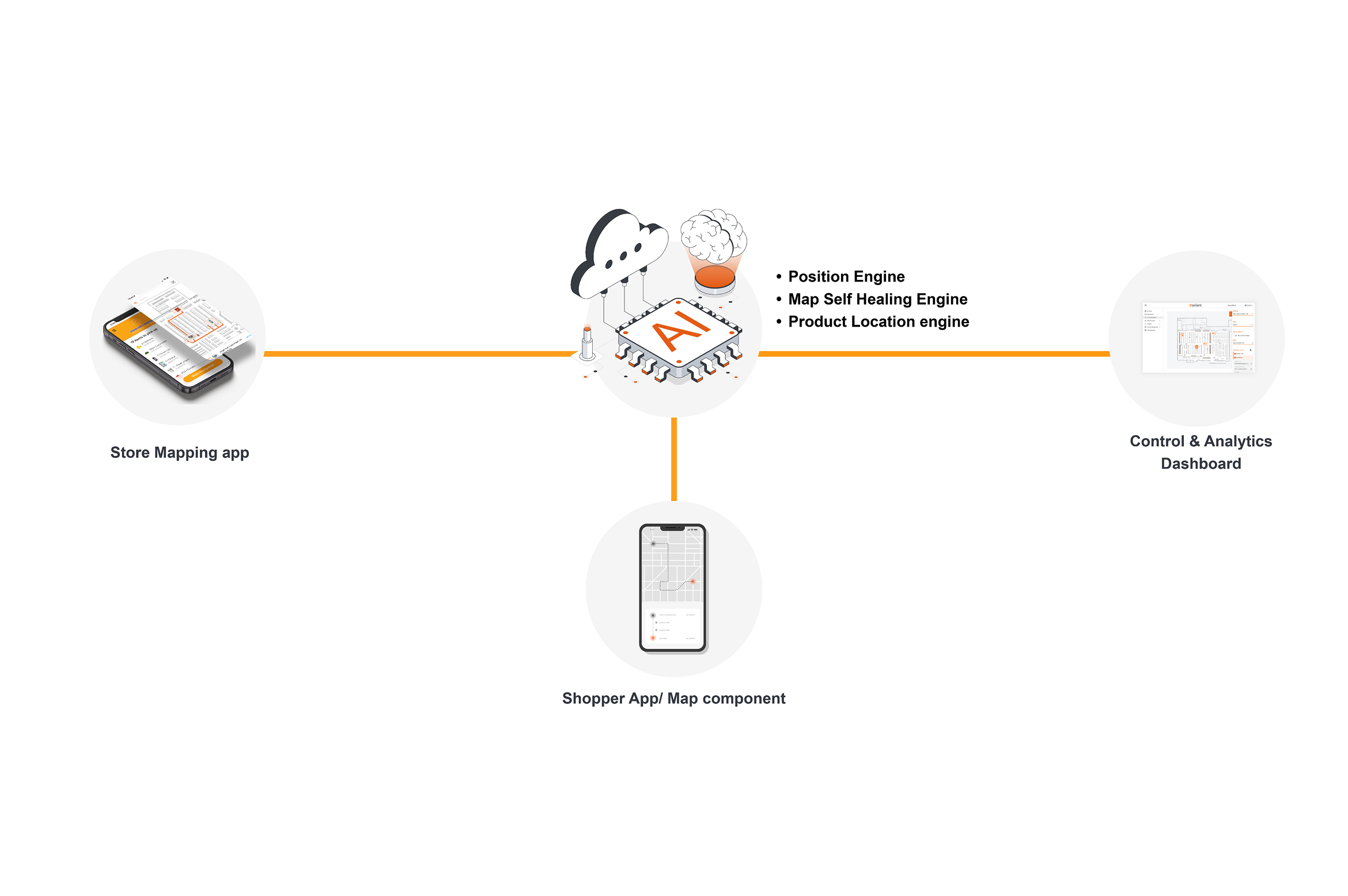
I led the redesign effort across Oriient's ecosystem, focusing on both user experience and visual consistency. My responsibility was to establish a scalable design system and apply it across mobile products, indoor navigation experiences, mapping tools, and analytics dashboards. Working closely with product and development teams, I translated complex technological capabilities into intuitive experiences while creating a shared design language that could support future growth.
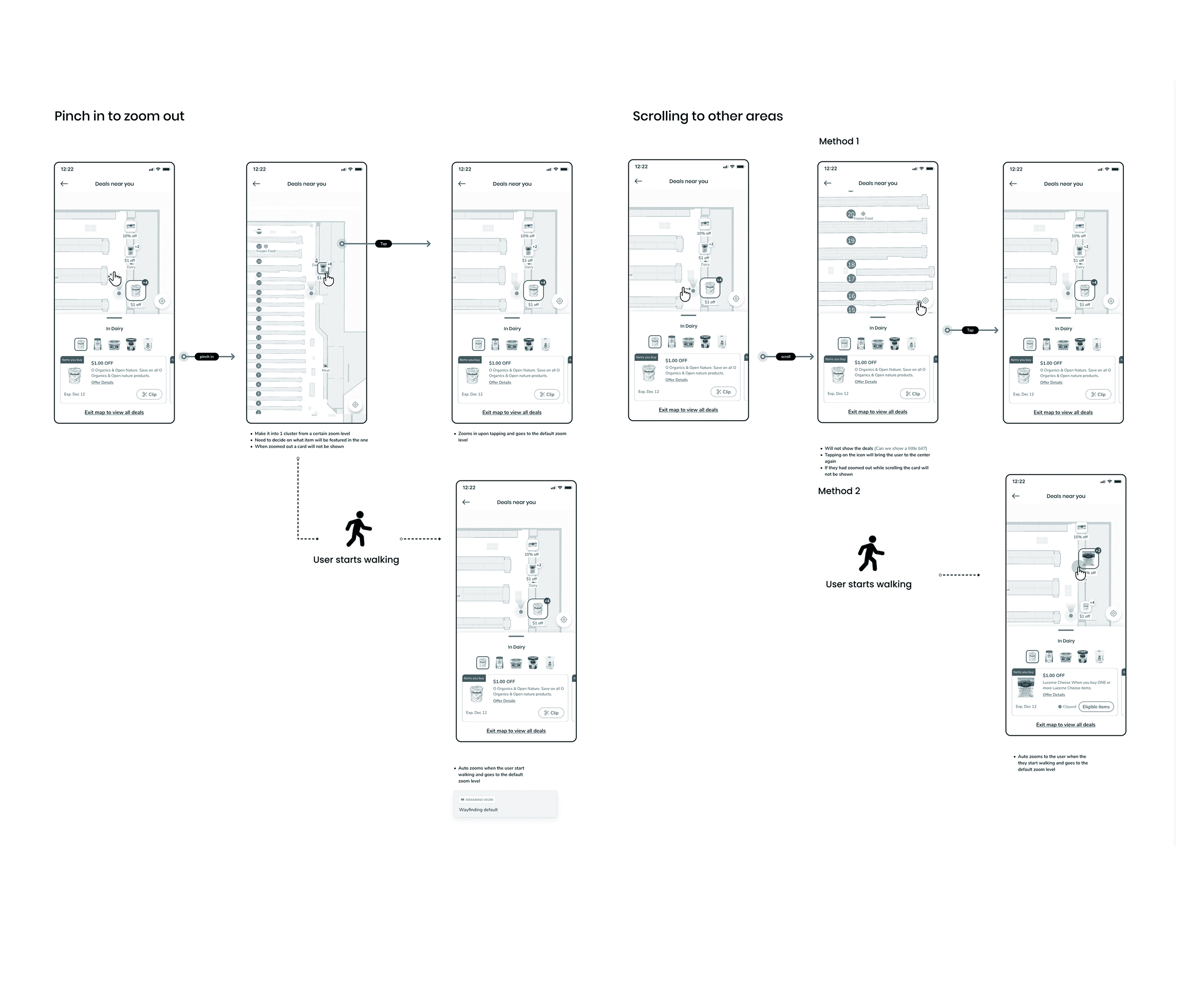
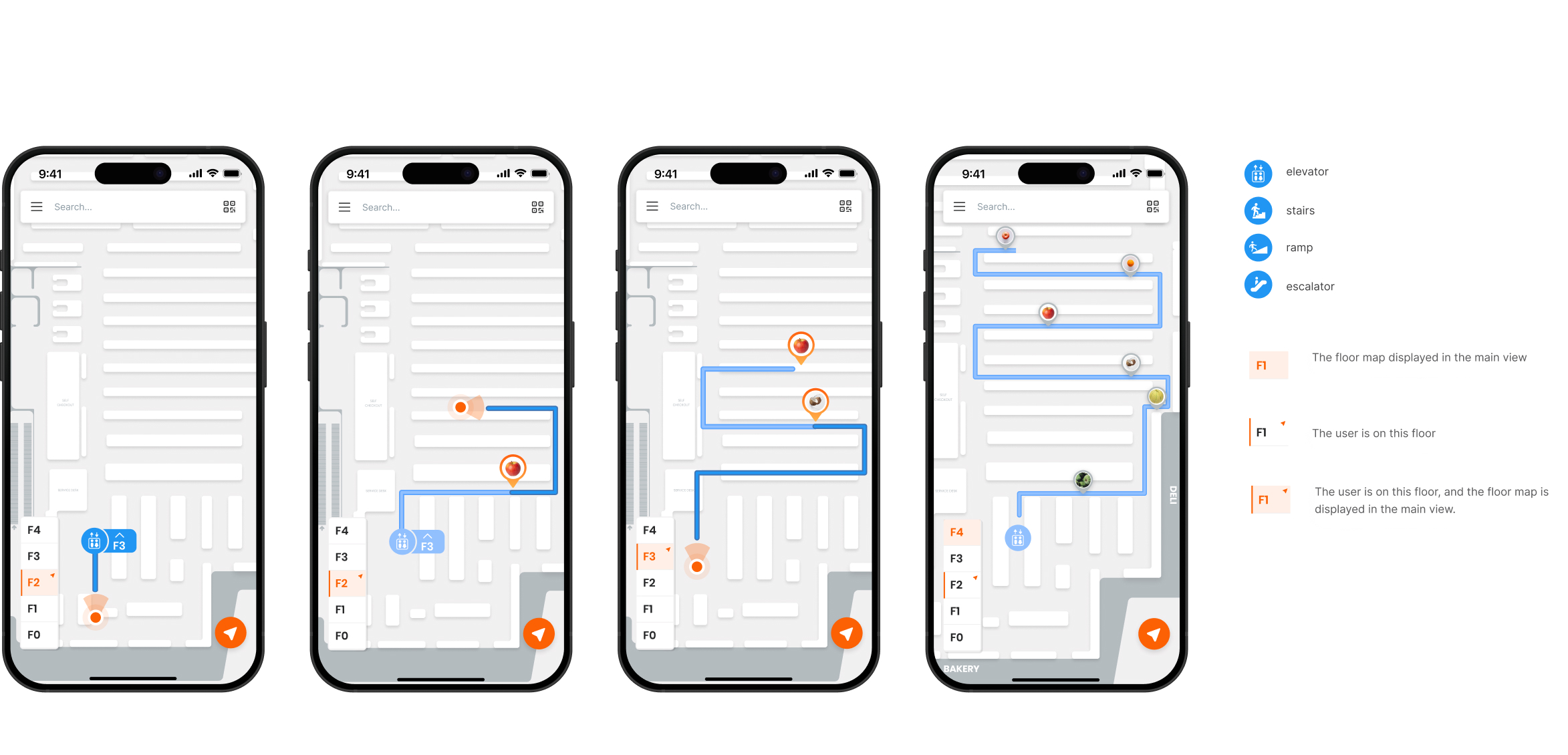
One of the key challenges was balancing immediate product needs with long-term product evolution. Every design decision had implications beyond the screen it was created for. A navigation pattern introduced in the mobile experience could later influence mapping tools, analytics dashboards, and future products that had not yet been defined. This required thinking beyond individual interfaces and focusing on the underlying structure of the ecosystem. Instead of designing screens, I was designing rules, relationships, and patterns that could support growth while preserving usability.
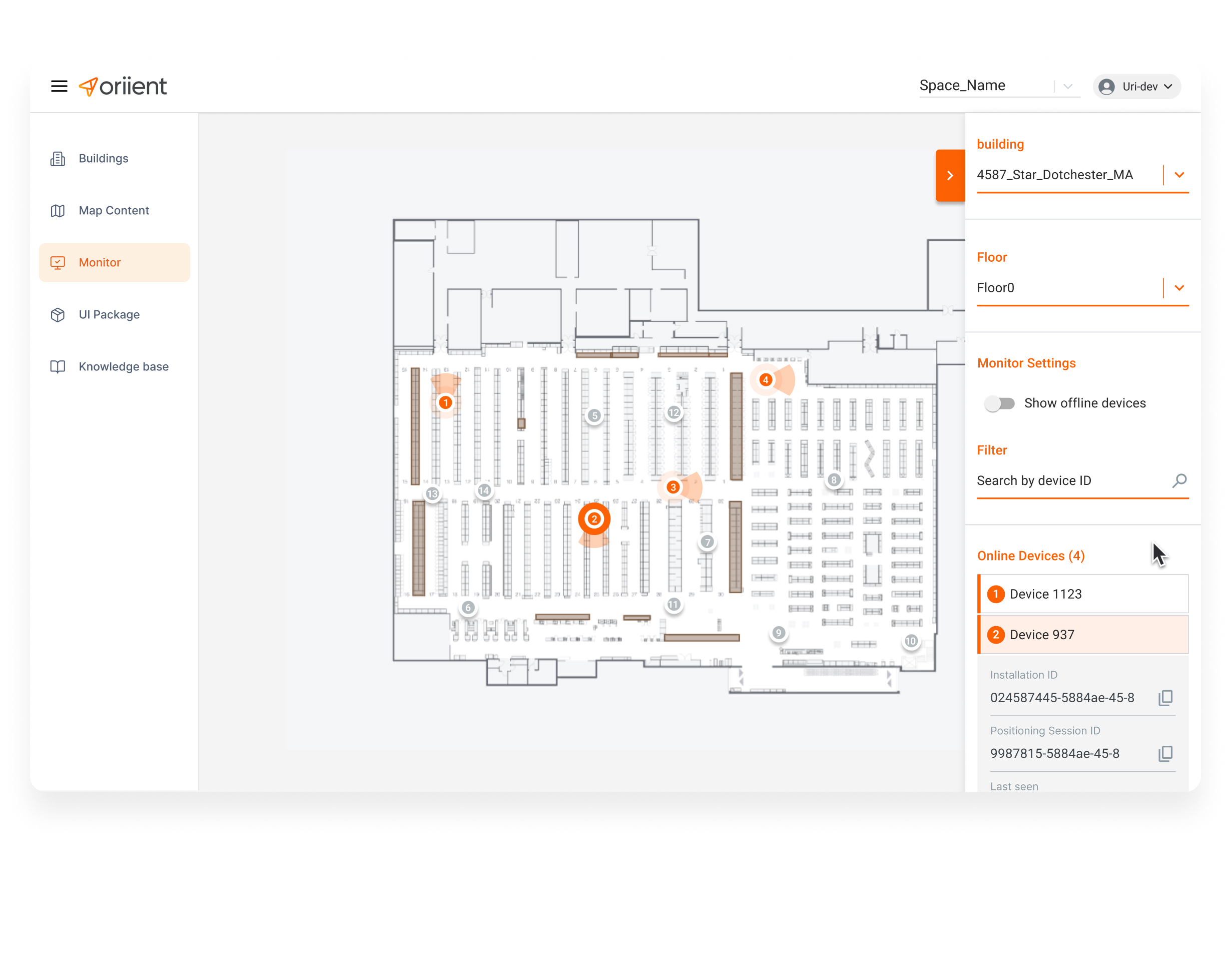
One of the most interesting challenges was designing for fundamentally different user journeys within the same ecosystem. For example, a shopper entering a shopping mall has completely different goals and expectations when compared to a retail manager, looking to analyze customer behavior.
The work extended far beyond visual redesign. It required rethinking user flows, simplifying decision points, and adapting interactions to very different contexts of use. Navigation experiences had to be fast and effortless, while analytical tools needed to support deeper exploration and decision-making. A significant part of the process focused on understanding how people move between goals, information, and actions across the platform. This led to a more intentional UX architecture that helped each experience feel tailored to its audience while remaining connected to the broader product ecosystem.
One of the most fascinating aspects of the project was redesigning the analytics experience. Oriient collected vast amounts of indoor location data, allowing retailers to understand how customers moved through physical spaces.
Through redesigned dashboards and visualization tools, complex datasets such as traffic density, dwell time, customer flow, and journey patterns became accessible business insights that could support operational and marketing decisions.
Working with Oriient reminded me that great user experiences are fundamentally about understanding people; Their goals, and the context in which they make decisions play a significant part in my design process.
Throughout the project, I worked with very different types of users, from shoppers navigating unfamiliar spaces to business users searching for patterns in complex datasets, and they were all looking for the same thing: Clarity.
Available for senior product design roles at companies
building complex, data-heavy products.
 Linkedin
 Send an email
 See Dribbble