Indigo
Designing a New Management
System for Private Markets
Designing a New Management
System for Private Markets
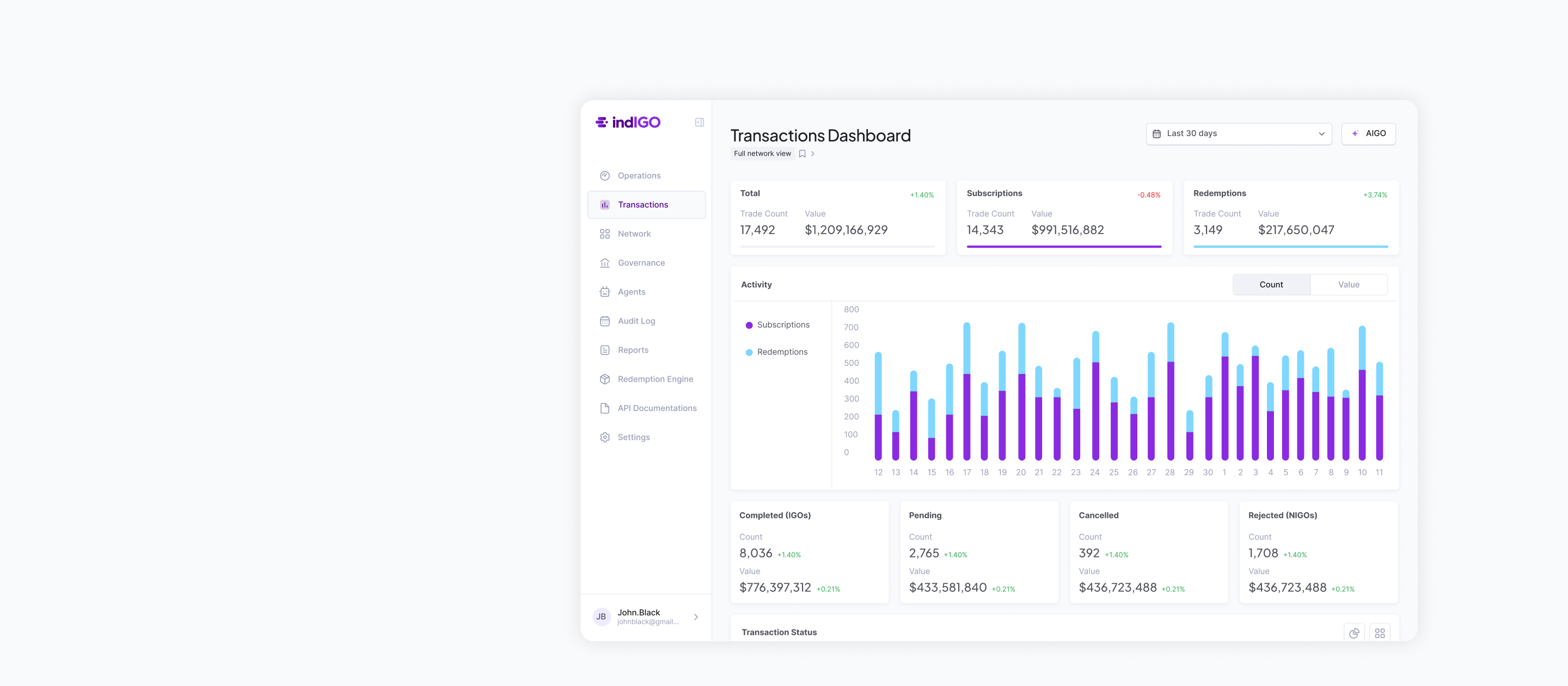
Indigo was created to solve a problem I encountered repeatedly while exploring the private markets industry: critical workflows were spread across disconnected systems, manual processes, spreadsheets, emails, and legacy tools. A single transaction could pass through multiple organizations, each using its own systems, terminology, and processes. Visibility was limited, investigations were slow, and operational errors were difficult to trace.
As Senior Product Designer, I joined the project at its earliest stages and helped shape the product from concept to execution, including product architecture, UX strategy, interface design, Design System creation, and AI-driven experiences.
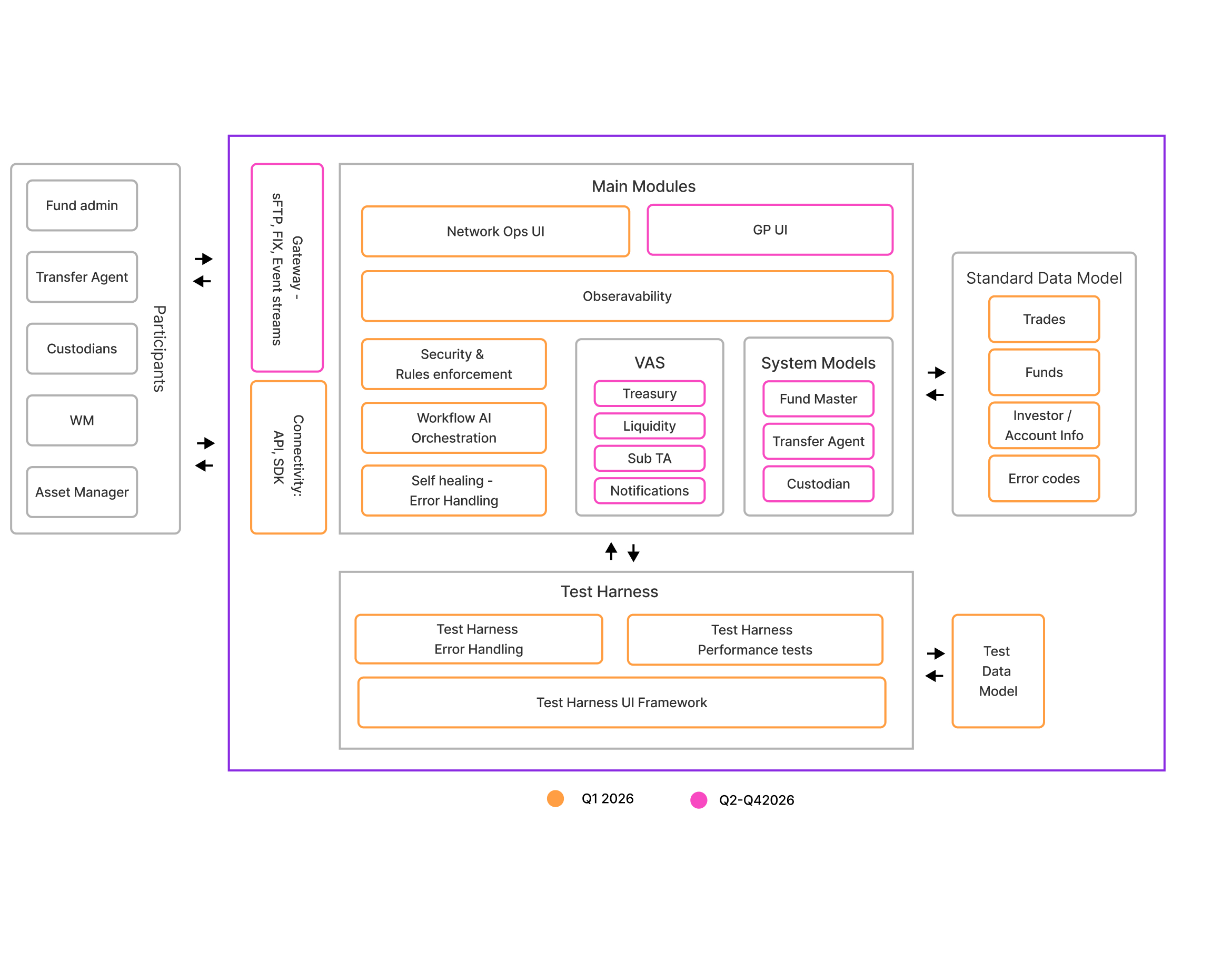
Before designing screens, I needed to understand the ecosystem itself. The platform connects Asset Managers, Wealth Managers, Transfer Agents, Custodians, Fund Masters, and Network Operators, all participating in the lifecycle of a transaction. What initially appeared to be a financial dashboard quickly revealed itself as a network orchestration challenge.
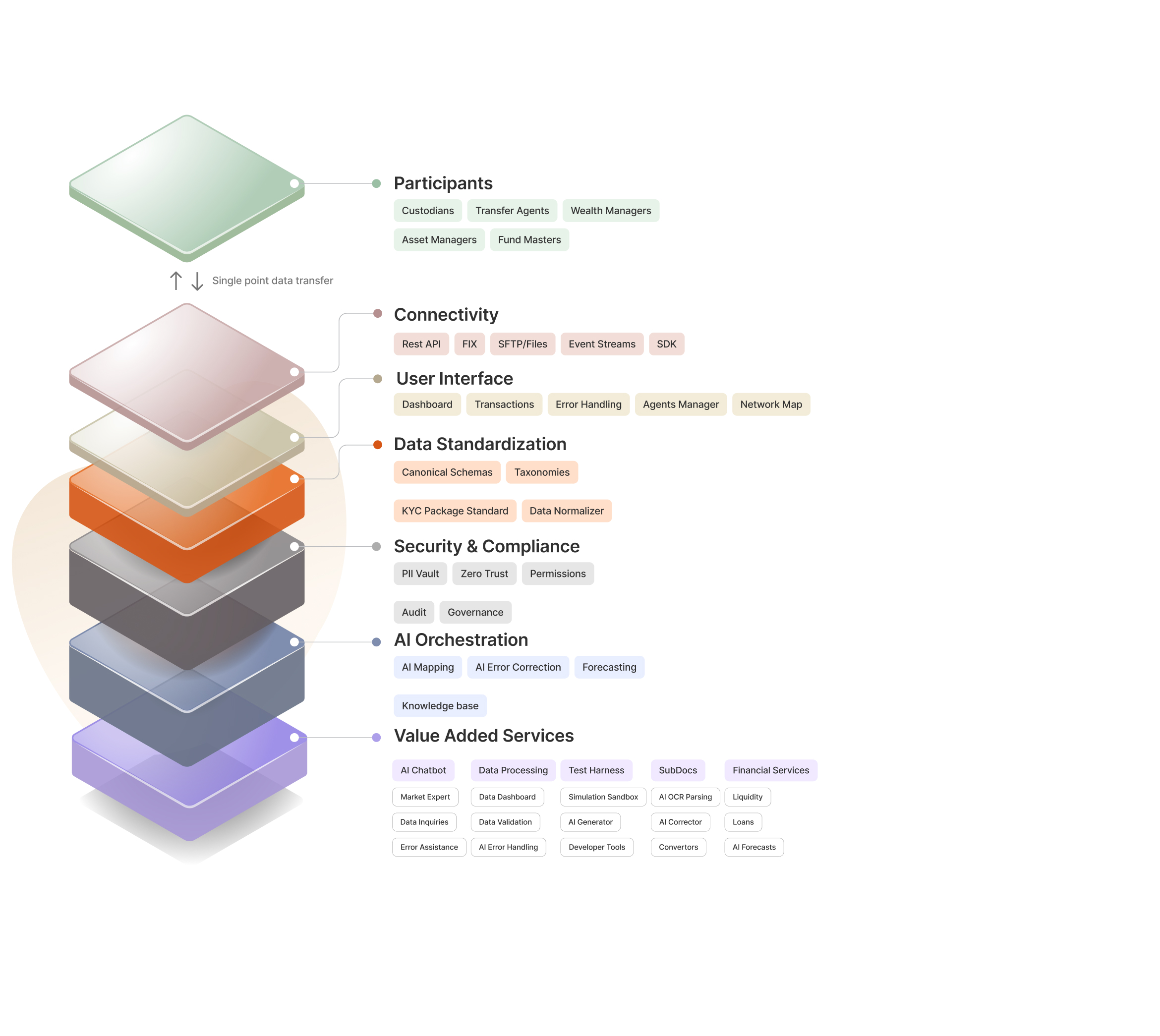
One of the most important design principles throughout the project was turning hidden operational processes into visual experiences. Instead of overwhelming users with tables, logs, and technical information, I focused on exposing only what mattered at each moment. The result: a layered experience that allows users to move naturally between monitoring, investigation, and action. Users can start from a high-level network overview and gradually drill down into specific transactions, participants, and operational events.
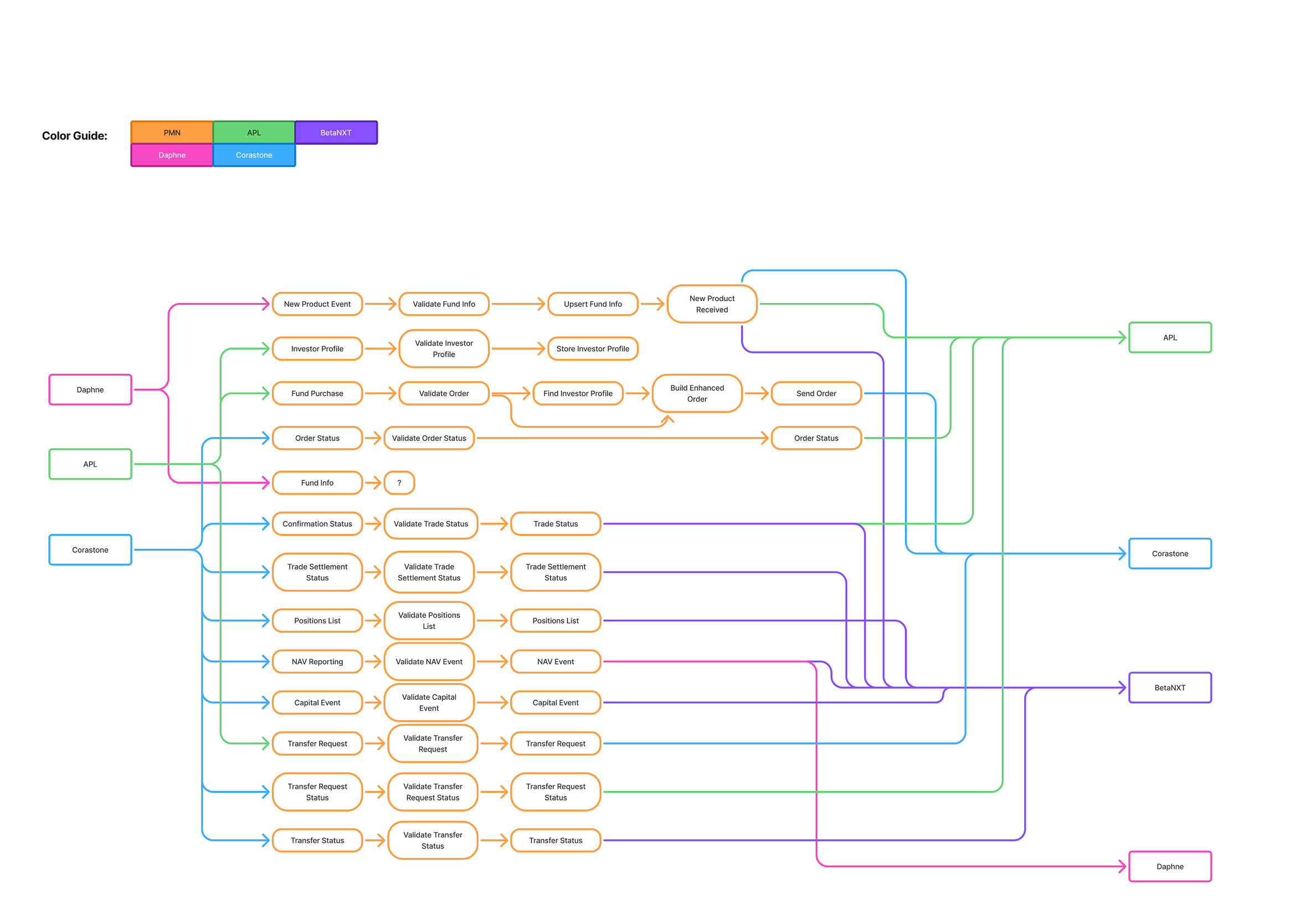
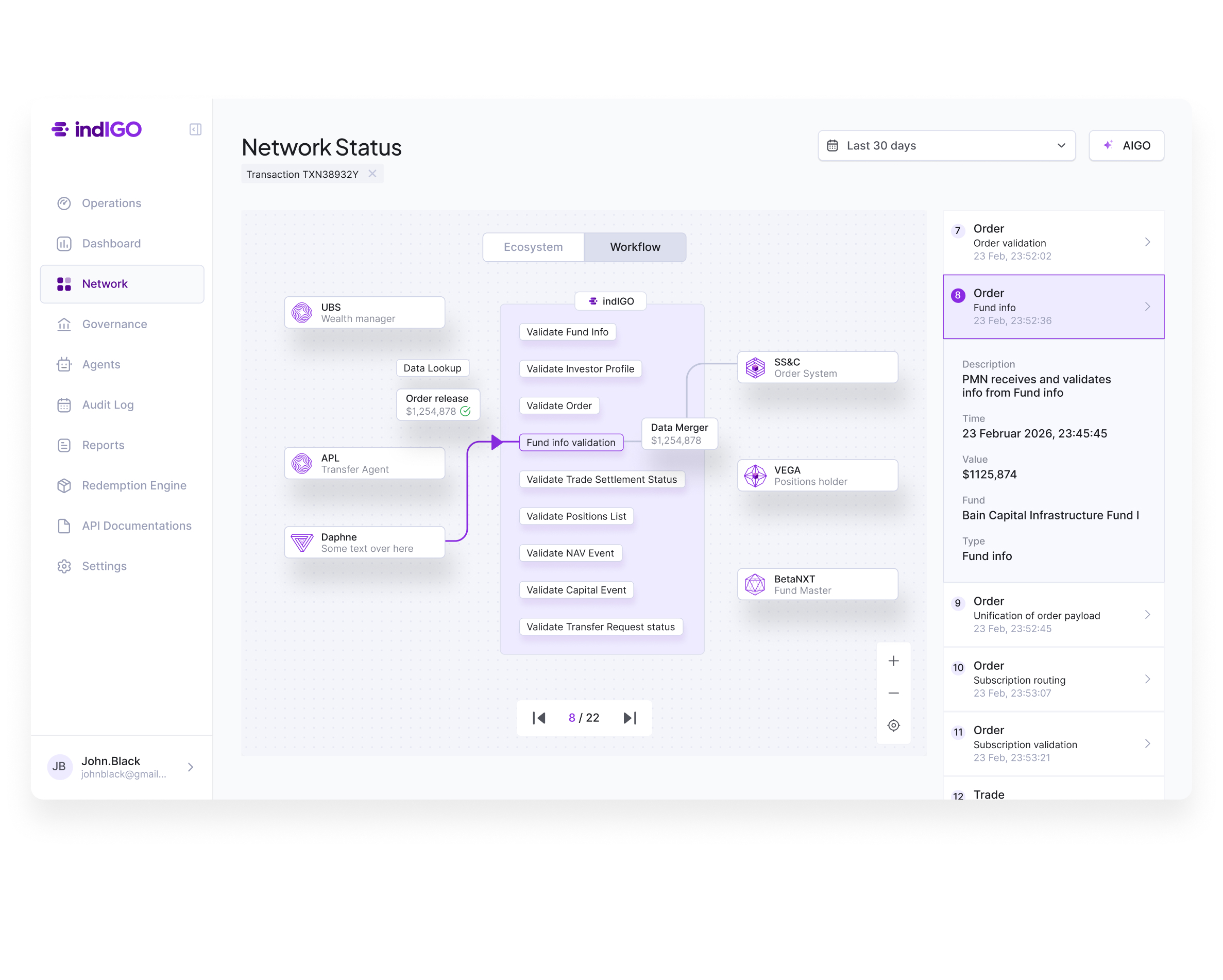
One challenge kept resurfacing during discovery sessions: When something goes wrong, how will users understand where the problem occurred? To solve this, I designed one of Indigo's most distinctive features: Time Machine.
Time Machine visualizes the complete lifecycle of a transaction and allows users to move through it step by step. Instead of reading through operational logs, users can see how a transaction travels across the network, where it was delayed, where it failed, and which participant was involved.
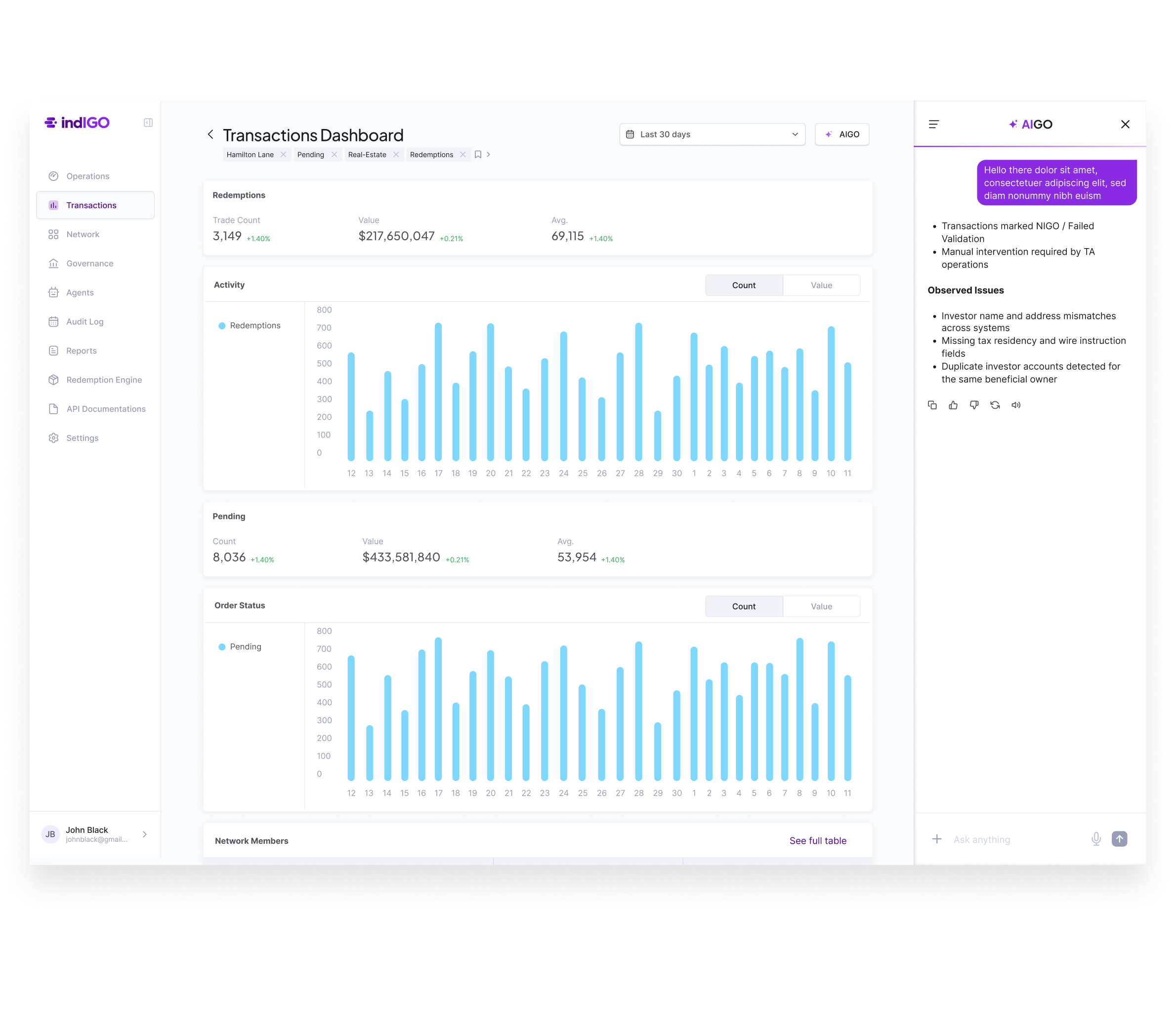
Rather than treating AI as a separate assistant, I wanted it to feel like a natural extension of the platform itself. The system should understand what users are trying to accomplish, and locate information FOR the user. This led to the creation of an AI layer integrated across the entire experience.
From any screen, users can ask questions, investigate transactions, identify issues, navigate the platform, apply filters, and receive contextual recommendations. The AI understands where the user is, what they are looking at, and what they are trying to achieve. It became a new way of interacting with the product.
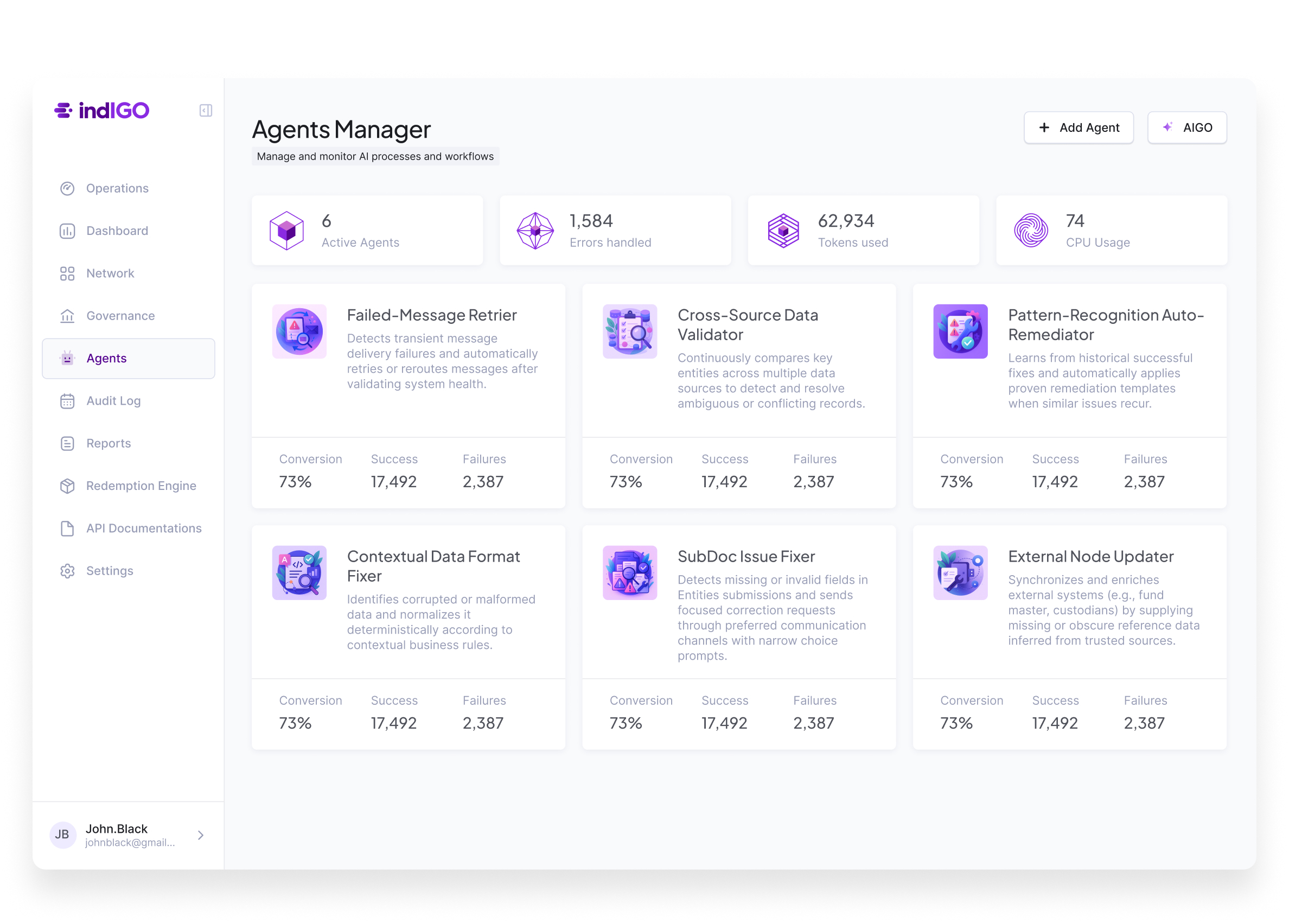
As the product evolved, we expanded the AI vision into an ecosystem of operational agents. These agents were designed to identify anomalies, validate information, investigate failures, and automate repetitive operational tasks. Rather than simply presenting data, the platform could actively participate in solving problems.
Indigo reinforced something I have learned throughout my career: Complex systems rarely fail from lack of information, they fail because people cannot make sense of that information quickly enough. The challenge was never to simplify the business itself, but to simplify the user's relationship with that complexity.
The project changed the way I think about AI. I no longer see AI as a feature added to a product - It is a new interaction layer that has the potential to reshape how users navigate, understand, and operate complex systems.
Although Indigo deals with transactions, networks, workflows, and financial operations, the project ultimately focused on people. Every design decision was guided by a simple question: How can we help someone understand faster, decide better, and act with greater confidence? That question shaped the product from the very beginning and remained the foundation of every design decision along the way.
Available for senior product design roles at companies
building complex, data-heavy products.
 Linkedin
 Send an email
 See Dribbble